Osteoporosis Screening (Bone Density Test / DEXA Scan)
🦴 Detect Weak Bones Before They Break
Osteoporosis Screening helps identify reduced bone strength before fractures occur. A Bone Mineral Density (BMD) test using Dual-Energy X-ray Absorptiometry (DEXA or DXA) is the most accurate and internationally recommended method for diagnosing osteoporosis and osteopenia.
✅ Early diagnosis allows timely treatment, lifestyle changes, nutritional intervention, and fracture prevention.

📌 Why Osteoporosis Screening Matters
Osteoporosis is often called the “Silent Disease” because bone loss occurs without symptoms until a fracture happens. Millions of people develop weakened bones gradually without realizing it.
- Hip fractures
- Spine fractures
- Wrist fractures
- Shoulder fractures
- Pelvic fractures
Early screening significantly reduces the risk of disability caused by fragile bones.
🧬 What is Osteoporosis?
Osteoporosis is a condition where bones become less dense, porous, fragile, and easily broken. With aging and hormonal changes, bone breakdown becomes faster than new bone formation, leading to loss of bone strength.
🔍 What is Osteoporosis Screening?
Osteoporosis Screening measures Bone Mineral Density (BMD). The gold standard investigation is the DEXA Scan, which accurately measures bone density in the hip, lumbar spine, and forearm.

👩⚕️ Who Should Get Osteoporosis Screening?
- Women aged 65 years and above
- Postmenopausal women (including early or surgical menopause)
- Men aged 70 years and above
- Adults with risk factors: fractures, long-term steroid use, rheumatoid arthritis, chronic kidney disease, thyroid disorders, vitamin D deficiency, smoking, alcohol use, family history, low body weight, poor nutrition, sedentary lifestyle
⚠️ Symptoms That May Indicate Weak Bones
- Loss of height
- Back pain
- Stooped posture
- Frequent fractures
- Fragility fractures (hip, wrist, vertebral compression)
🩻 What is a Bone Density (DEXA) Scan?
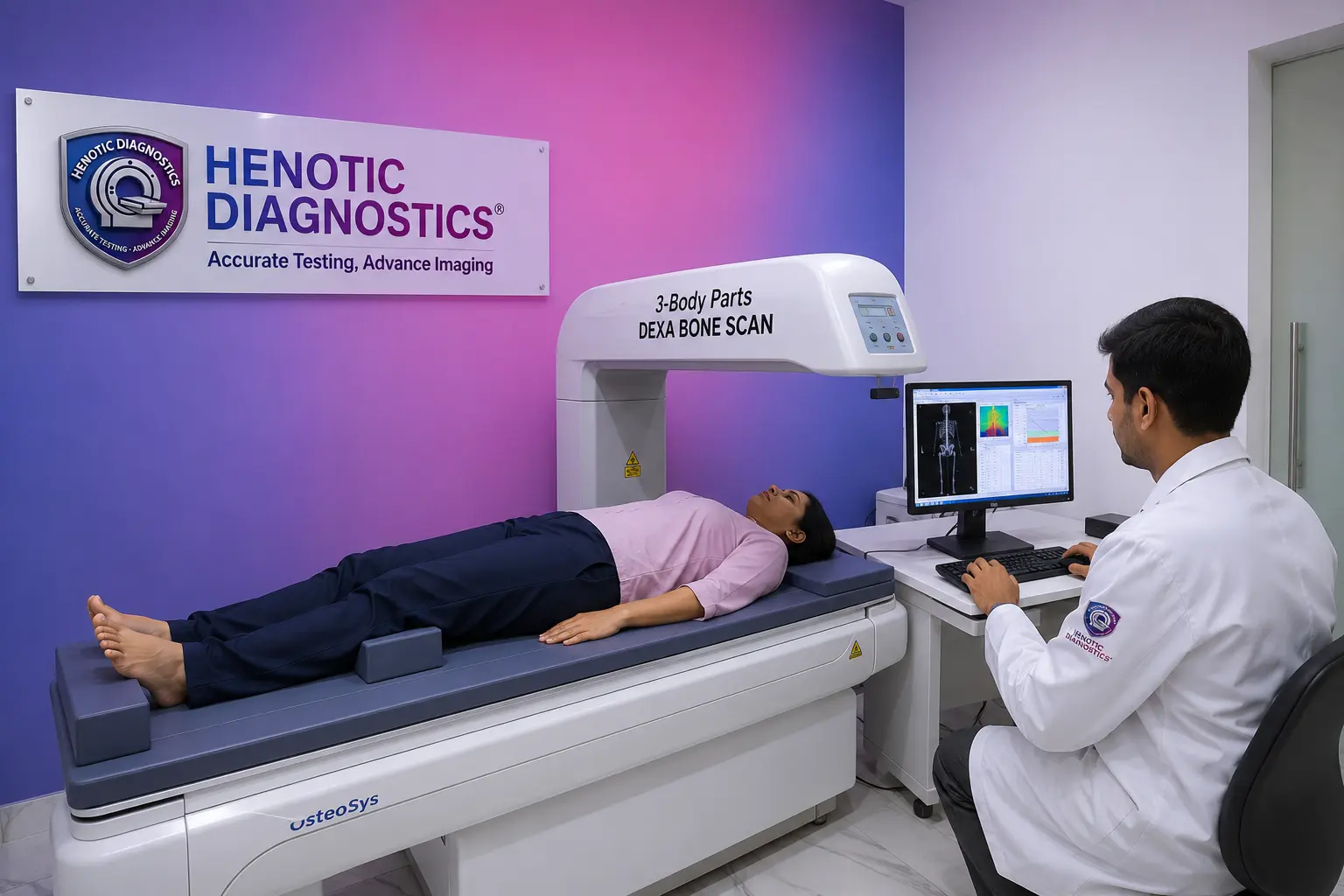
A DEXA Scan is a low-dose X-ray examination that measures bone mineral density. It is quick, painless, non-invasive, highly accurate, and uses very low radiation.
📝 Preparation for Osteoporosis Screening
- Wear loose clothing
- Avoid calcium supplements for 24 hours (if advised)
- Inform the radiographer about recent contrast studies
- Inform the doctor if pregnant
Fasting is not required.
⚙️ Procedure
- Registration and medical history review
- Patient lies comfortably on the scanning table
- Scanner moves over the body
- Images are captured
- Bone density measurements calculated
- Radiologist interprets results
Duration: 10–20 minutes. The scan is painless, with no injections, contrast, or anesthesia.

📊 Understanding Bone Density Results
- Normal: T-score above -1
- Osteopenia: Between -1 and -2.5
- Osteoporosis: Below -2.5
Z-scores compare bone density with people of similar age, gender, and body size.
🌟 Benefits of Osteoporosis Screening
- Fracture prevention
- Early treatment
- Better long-term bone health
- Reduced disability
- Improved quality of life
- Monitoring treatment response
- Assessment of future fracture risk
💪 Lifestyle Measures to Improve Bone Health
- Regular weight-bearing exercise
- Strength training
- Adequate calcium intake
- Vitamin D supplementation
- Smoking cessation
- Reduce alcohol intake
- Prevent falls
- Maintain healthy body weight
❓ Frequently Asked Questions
➡️ What is osteoporosis screening?
It measures bone mineral density using a DEXA scan to detect weak bones before fractures occur.
➡️ Is a DEXA scan painful?
No. The scan is painless, quick, and non-invasive.
➡️ Do I need fasting?
No. Fasting is generally not required.
➡️ How long does the scan take?
Usually between 10 and 20 minutes.
➡️ Is radiation dangerous?
No. Radiation exposure is extremely low, much less than a chest