

Patient Transport Ambulance — 24/7 Safe Medical Transport
Patient Transport Ambulance from Henotic Diagnostics delivers dedicated, medically supervised movement of patients between homes, hospitals, clinics, and diagnostic centres — with the right ambulance type, trained medical crew, and on-board equipment matched to every patient’s condition.
Moving a patient safely requires more than just a vehicle — it requires the right medical environment, equipment configuration, and trained personnel matched to the patient’s clinical status. Whether the situation calls for a basic stretcher ride or a fully monitored critical-care transfer, our service follows National Association of Emergency Medical Technicians (NAEMT) best practices and WHO patient safety transport guidelines.

What Is a Patient Transport Ambulance?
A patient transport ambulance is any medically equipped vehicle used to move a patient from one location to another under supervised care. Unlike a regular taxi or private car, it provides a controlled medical environment — stretcher support, vital-sign monitoring, oxygen availability, and trained staff — to keep the patient safe and stable throughout the journey.
The type of ambulance assigned depends entirely on the patient’s medical condition, mobility, and the level of care required during transit. This can range from a basic assisted-transport unit for stable patients to a fully equipped intensive-care ambulance for critically ill individuals.
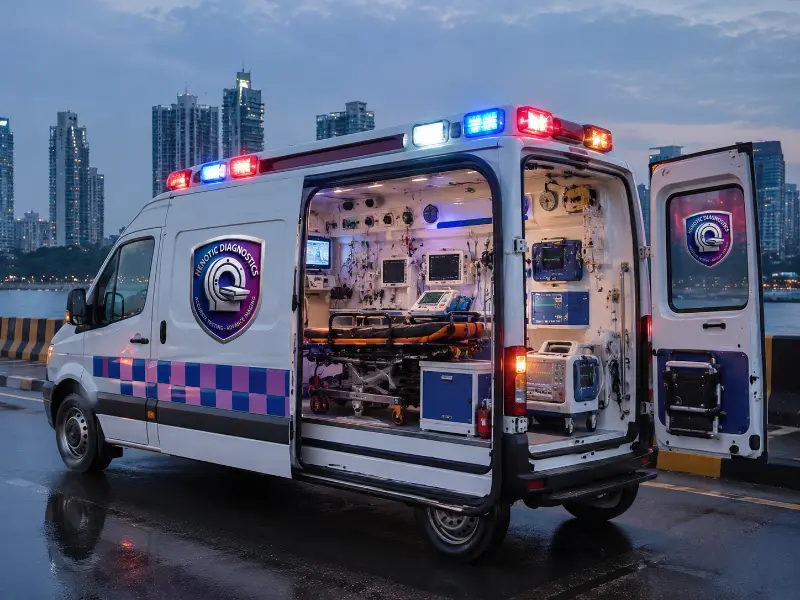
Choose the Right Ambulance for the Patient
Every patient has different medical needs during transport. We operate a range of specialised ambulance types so the right vehicle, crew, and equipment can be matched to each situation:
BLS Ambulance
Basic stretcher transport, oxygen, and monitoring for medically stable patients.
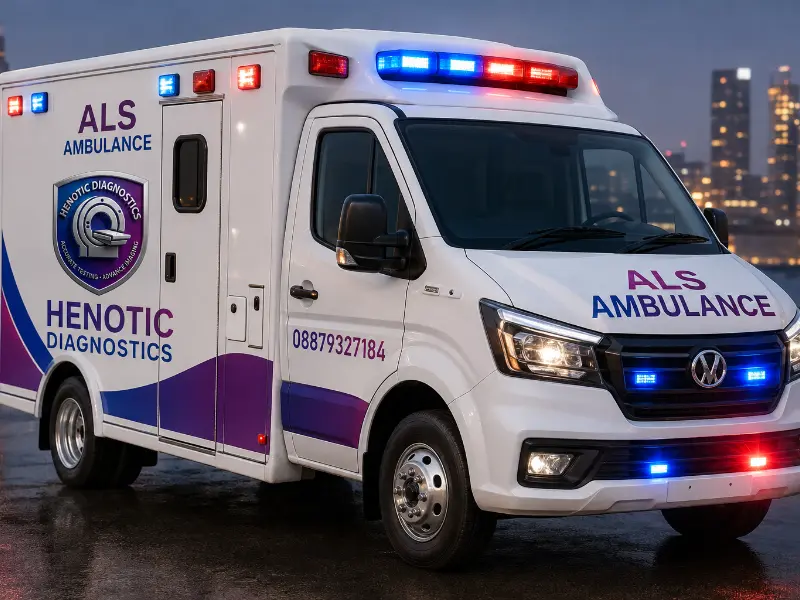
ALS Ambulance
Advanced cardiac drugs, ventilator support, and intensive monitoring for critical patients.
Cardiac Ambulance
Specialised heart-monitoring equipment and trained cardiac-care paramedics on board.
ICU Ambulance
Mobile intensive-care unit with ventilator, multi-parameter monitors, and critical-care team.
Oxygen Ambulance
Continuous medical-grade oxygen delivery for respiratory patients during transit.
Wheelchair Ambulance
Ramp-access, wheelchair-locking, and assisted boarding for non-emergency mobility transport.
Common Patient Transport Scenarios
The table below outlines typical situations where dedicated medical transport is required, along with the recommended ambulance type:
| Scenario | Recommended Ambulance |
|---|---|
| Hospital discharge (stable patient) | BLS Ambulance or Wheelchair Ambulance |
| Inter-hospital transfer (stable) | Hospital Transfer Ambulance |
| Cardiac patient movement | Cardiac Ambulance |
| Post-surgery transfer requiring oxygen | Oxygen Ambulance |
| Ventilator-dependent patient | Ventilator Ambulance or ICU Ambulance |
| Critical or unstable patient | ALS Ambulance or ICU Ambulance |
| Elderly or bedridden patient | BLS Ambulance (stretcher transport) |
| Diagnostic appointment transport | BLS or Wheelchair Ambulance |
| Road accident / emergency | Emergency Ambulance |
Not sure which ambulance type is appropriate? Call 088793 27184 — our team will assess the patient’s condition and recommend the right vehicle.
What Makes Our Medical Transport Different?
Condition-Matched Vehicles
We don’t send the same ambulance for every call. The vehicle, equipment, and crew are selected based on the patient’s specific clinical requirements.
Trained Medical Personnel
Every ambulance is staffed by qualified emergency medical technicians or paramedics trained in patient handling, positioning, and in-transit medical support.
Round-the-Clock Availability
Our dispatch centre operates 24 hours a day, 365 days a year. Whether the need arises at 3 AM or during a public holiday, transport can be arranged.
Single-Call Coordination
One phone call handles everything — patient assessment, vehicle allocation, crew assignment, pickup confirmation, and destination coordination.
How We Keep Patients Safe During Transport
Every medical transport follows a structured safety protocol designed to protect the patient from pickup to destination:
- Pre-transport assessment: The patient’s condition, mobility, oxygen needs, and monitoring requirements are evaluated before dispatching an ambulance.
- Ambulance type selection: The appropriate vehicle is assigned — from basic assisted transport to full ICU-on-wheels — based on the assessment.
- Secure patient loading: Stretcher, wheelchair, or assisted boarding with proper body positioning and safety restraints.
- Continuous monitoring en-route: Vital signs are tracked throughout the journey. Equipment is ready for immediate intervention if needed.
- Safe handover at destination: The patient is transferred to the receiving team with a full summary of in-transit observations.

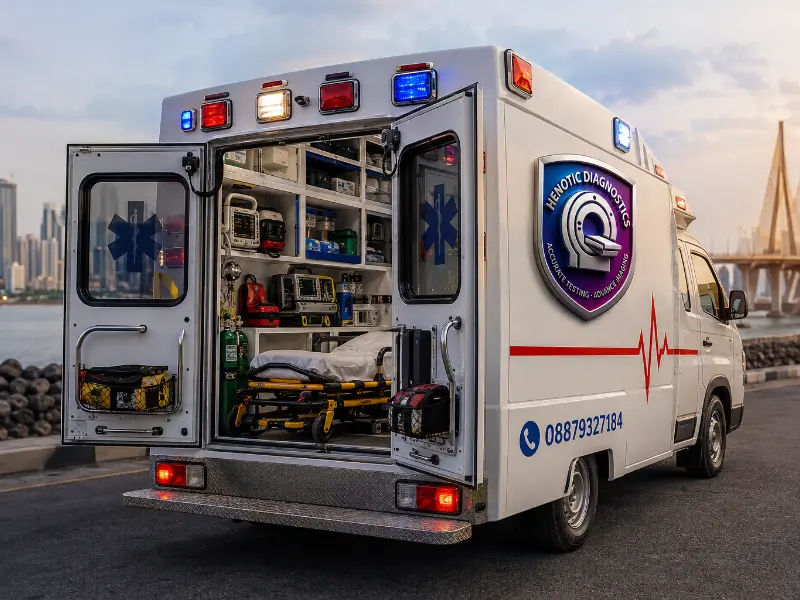
On-Board Equipment Across Our Fleet
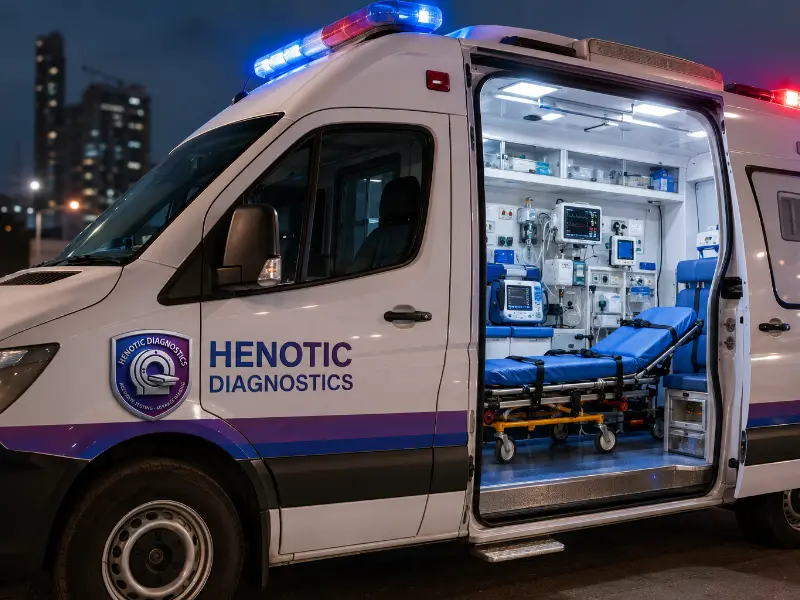
The exact equipment configuration varies by ambulance type. Across our fleet, the following equipment may be available depending on the vehicle assigned:
| Equipment Category | Details |
|---|---|
| Patient Stretcher | Adjustable hydraulic stretchers with secure locking restraints for safe positioning. |
| Wheelchair Ramp | Integrated ramp-access for wheelchair-dependent patients. |
| Oxygen System | Portable and fixed oxygen cylinders with regulators (2–15 L/min range). |
| Monitoring Devices | BP, pulse oximetry, ECG, temperature, capnography (on advanced units). |
| Ventilator | Transport ventilators on ICU and ventilator-ambulance units. |
| Cardiac Equipment | Defibrillator, syringe pumps, and cardiac drugs (on ALS/cardiac units). |
| First-Aid & Suction | Trauma kits, airway adjuncts, and portable suction units on all vehicles. |
Specific equipment requirements should be communicated when booking so the correctly configured ambulance is dispatched.
How to Arrange Medical Transport — One Call
Describe the Patient
Share the patient’s medical condition, age, mobility status, and any equipment they currently need (oxygen, ventilator, wheelchair).
Provide Route Details
Tell us the pickup address, destination (hospital, clinic, home), and preferred timing.
Receive Vehicle Recommendation
Our team assesses the information and recommends the right ambulance type, crew, and equipment configuration.
Confirm & Travel
Confirm the booking. The assigned ambulance arrives, loads the patient safely, and transports them with continuous medical supervision.
You can also use our online booking portal or the 24/7 dedicated dispatch line.
Who Needs Dedicated Medical Transport?
A dedicated ambulance for patient movement may be necessary when:
- The patient cannot safely travel in a private car, taxi, or ride-share
- A stretcher or wheelchair is required for the journey
- The patient needs oxygen, monitoring, or medical supervision en-route
- A hospital is discharging a patient who requires assisted transportation home
- A patient needs to be moved between two healthcare facilities
- The patient has a scheduled diagnostic appointment (MRI, CT, ultrasound, 2D Echo, TMT test)
- An elderly or bedridden individual needs to visit a doctor or specialist
- A critically ill patient requires inter-hospital transfer with intensive-care support
Frequently Asked Questions
What is a patient transport ambulance?
It is a medically equipped vehicle used to move patients safely between locations — homes, hospitals, clinics, or diagnostic centres — with the appropriate level of medical supervision and on-board equipment.
How do I know which ambulance type my patient needs?
Call our helpline and describe the patient’s condition, mobility, and medical requirements. Our team will recommend the most appropriate ambulance type — from basic stretcher transport to full ICU-on-wheels.
Can I book medical transport for a hospital discharge?
Yes. Hospital discharge transport is one of the most common bookings we handle. We provide stretcher, wheelchair, or assisted ambulance transport depending on the patient’s condition.
Is this service available 24 hours?
Yes. Our dispatch centre operates 24/7, including public holidays and weekends. Call 088793 27184 any time.
Can you transport a ventilator-dependent patient?
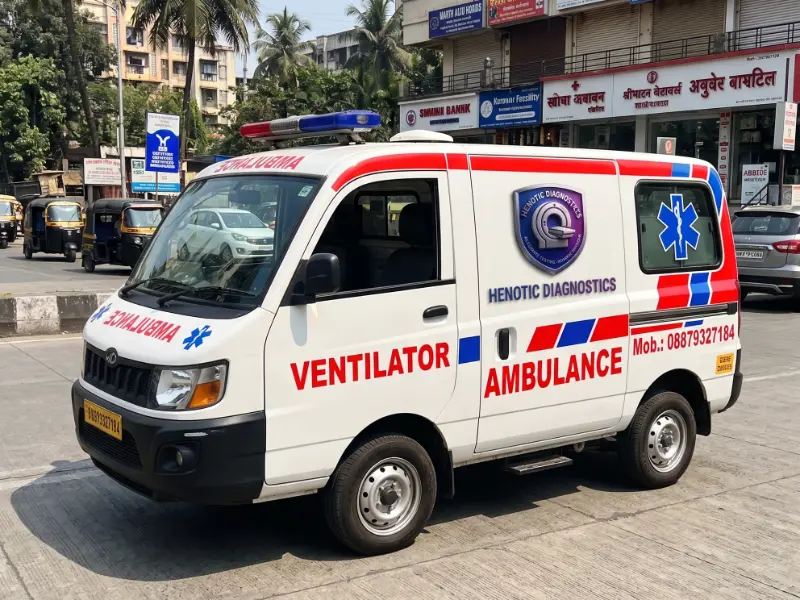
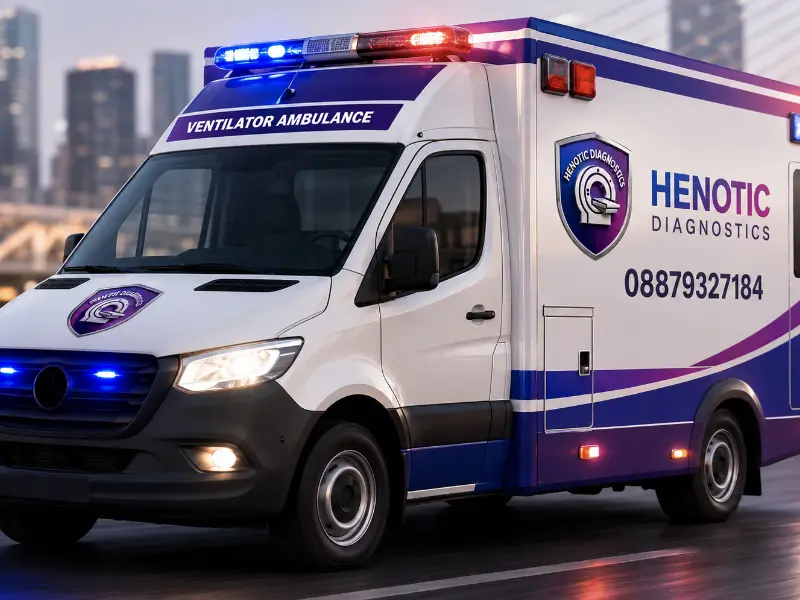
Yes. We operate specialised ventilator ambulances and ICU ambulances with transport ventilators, multi-parameter monitors, and a critical-care medical team on board.
How much does medical transport cost?
Cost varies depending on the ambulance type, distance, equipment required (oxygen, ventilator, cardiac monitors), and whether the trip is one-way or return. Contact us with the patient’s details for an accurate quote.
Can a family member accompany the patient?
In most cases, one family member or caregiver may accompany the patient inside the ambulance. This should be confirmed at the time of booking based on vehicle capacity.
Do you transport patients to diagnostic appointments?
Yes. We regularly transport patients to scheduled MRI scans, CT scans, ultrasound examinations, and health checkup appointments.
How quickly can the ambulance arrive?
Response time depends on vehicle availability, pickup location, and traffic. For planned transfers, we recommend booking in advance. For urgent needs, dispatch is typically within 30–60 minutes in urban areas.
What if the patient’s condition worsens during transport?
All ambulances carry emergency intervention equipment. If a patient’s condition deteriorates en-route, the crew can initiate stabilisation measures and, if necessary, divert to the nearest emergency department.
Contact Henotic Diagnostics


Henotic Diagnostics
📍 Address: Second floor, Millennium Empire, Business Park, Plot No 47, D Mart Rd, Sector 15, Kharghar, Panvel, Maharashtra 410210
🗺️ Google Maps:
 Get Directions
📞 24/7 Helpline: 088793 27184
🕒 Opening Hours: Open 24 hours, 365 days a year