Kidney Function Test (KFT)
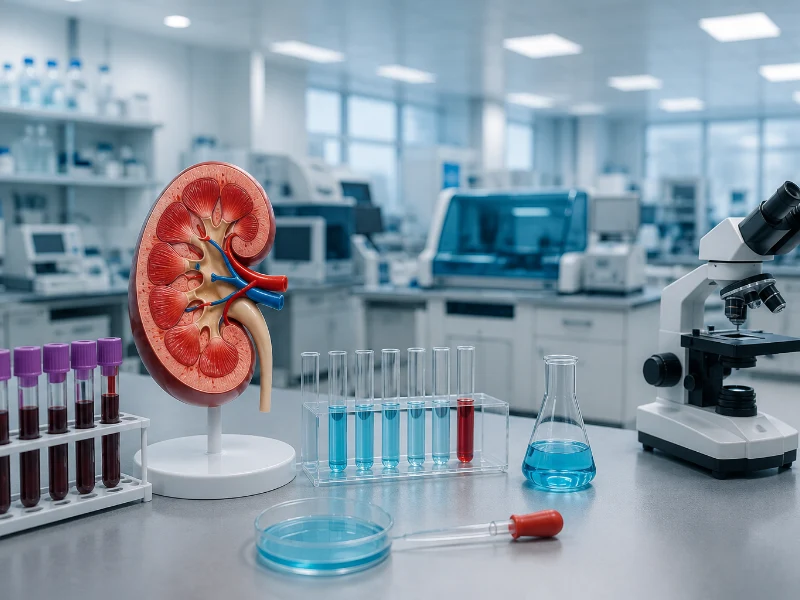
A Kidney Function Test (KFT), also frequently referred to as a renal function panel, is a specialized group of blood and urine evaluations designed to measure the clinical efficiency of your kidneys. By tracking specific metabolic waste products, filtration clearances, and serum electrolyte balances, this profile provides critical data regarding how well your kidneys filter cellular waste from the bloodstream. Specifically, by using advanced automated clinical chemistry technology, our laboratory evaluates renal performance with exceptional precision.
Furthermore, because the kidneys are vital organs responsible for blood pressure regulation, fluid balance, toxin elimination, red blood cell production signaling, and bone health management, early detection of functional decline is crucial. Consequently, our dedicated renal protocols utilize ultra-precise enzymatic methodologies and automated glomerular filtration rate calculation tracking. As a result, physicians easily identify early-stage renal impairment, diabetic nephropathy, hypertensive damage, and metabolic changes that may remain completely asymptomatic in early phases.
What is a Kidney Function Test (KFT)?
A Kidney Function Test is a detailed profile that measures metabolic markers directly managed, filtered, or excreted by the renal system. Therefore, high-resolution laboratory analysis allows our pathologists to accurately evaluate glomerular health, tubular reabsorption capabilities, and systemic electrolyte balances for a comprehensive diagnostic assessment.
- Serum Creatinine
- Blood Urea Nitrogen (BUN)
- BUN-to-Creatinine Ratio
- Estimated Glomerular Filtration Rate (eGFR)
- Serum Uric Acid
- Serum Sodium
- Serum Potassium
- Serum Chloride
- Bicarbonate (Total CO2)
- Serum Calcium
- Serum Phosphorus
- Urine Albumin-to-Creatinine Ratio (UACR)
Why is a Kidney Function Test Performed?
Physicians commonly recommend a Kidney Function Test when they suspect underlying renal complications, manage chronic metabolic diseases, evaluate physical fluid retention symptoms, or monitor medication safety. Moreover, the examination directly assists nephrologists, endocrinologists, cardiologists, urologists, and general practitioners in establishing accurate diagnoses and treatment strategies. Our experienced medical team ensures you receive precise results.
- Long-term monitoring of Hypertension (High Blood Pressure)
- Routine tracking of Diabetes mellitus (Diabetic Nephropathy surveillance)
- Unexplained swelling in feet, ankles, legs, or face (Edema)
- Persistent fatigue, lack of concentration, or poor appetite
- Changes in urination frequency, color, or foaming
- Unexplained lower back pain near the rib cage
- Monitoring patients taking nephrotoxic or chronic medications
- Evaluation prior to contrast-enhanced diagnostic imaging (such as CT scans)
- Suspected kidney stone development
- Family history of chronic renal failure or polycystic kidney disease
Key Parameters Evaluated During a Kidney Function Test
Serum Creatinine
We evaluate the levels of creatinine, a waste product generated by normal muscle breakdown. Elevated concentrations strongly indicate a reduction in the kidneys’ waste filtering capacity.
Blood Urea Nitrogen (BUN)
Our team measures urea nitrogen, a byproduct of protein metabolism by the liver. Fluctuations help identify renal clearance changes, dehydration states, or dietary protein variances.
Estimated Glomerular Filtration Rate (eGFR)
The system automatically calculates filtration speed based on serum creatinine, age, and sex. This remains the definitive gold standard metric for assessing and staging chronic kidney health.
Electrolyte Homeostasis
We determine circulating concentrations of sodium, potassium, and chloride. Safe renal pathways are critical to keeping these electrolytes balanced to avoid neuromuscular and cardiac rhythm complications.
Uric Acid and Mineral Metrics
The panel tracks uric acid, calcium, and phosphorus balances. This helps clinicians identify risk metrics associated with gout, metabolic bone disease, or crystal precipitation.
Conditions Diagnosed and Monitored via KFT Panels
An accurate Kidney Function Test assists in diagnosing a wide range of acute, chronic, systemic, or localized metabolic disorders affecting renal tissues. You can cross-reference clinical standards from the National Kidney Foundation guidelines.
- Acute Kidney Injury (AKI)
- Chronic Kidney Disease (CKD) staging
- Diabetic Nephropathy
- Hypertensive Nephrosclerosis
- Glomerulonephritis
- Interstitial Nephritis
- Polycystic Kidney Disease (PKD) tracking
- Renal Calculi (Kidney stones secondary complications)
- Post-renal urinary tract obstructions
- Dehydration and Pre-renal Azotemia
- Uremic syndromes
If you experience subtle yet progressive metabolic signs, your clinician may suggest this panel. Similarly, if your physician requires an objective baseline laboratory layout before evaluating broader hormonal or neuroendocrine patterns, you can review our companion blood test services or specialized neuro-imaging via our MRI Pituitary Brain services.
Preparation for a Kidney Function Test
- Fasting for 8 to 12 hours may be requested depending on concurrent tests in your panel.
- Drink adequate amounts of plain water to ensure proper hydration before the sample collection.
- Avoid eating excessive amounts of cooked meat or protein 24 hours prior to testing.
- Inform our staff about all prescription drugs and supplements you take.
- Avoid strenuous, intense muscle workouts immediately prior to blood collection.
What Happens During the Laboratory Collection?
- Our professional phlebotomists position you comfortably in the draw suite.
- A sterile area over an accessible vein in your arm is cleaned using an antiseptic solution.
- We collect your sample quickly using advanced, single-use vacuum tube technology.
- The needle is carefully removed, and a gentle compression pad is applied to the site.
- Samples are accurately barcoded and transferred directly to our automated analyzer systems.
- Our experienced pathologists review the chemistry outputs to verify analytical accuracy.
The blood drawing sequence is highly efficient, typically taking less than 5 minutes to safely complete.
Frequently Asked Questions
Is fasting mandatory for a Kidney Function Test?
Fasting is not strictly required for a basic creatinine or urea blood test. However, because KFTs are frequently bundled with fasting blood sugar, lipemia controls, or broader metabolic profiles, fasting for 8 to 12 hours is generally recommended for complete accuracy.
What does a low eGFR value mean?
Your estimated Glomerular Filtration Rate (eGFR) tells you how efficiently your kidneys filter waste. A value above 90 is considered normal. Scores below 60 that persist over a 3-month period indicate reduced function and should be carefully evaluated by a physician.
Can temporary factors cause abnormal creatinine results?
Yes. Severe dehydration, a recent meal high in meat, intensive muscle workouts, or certain medications can temporarily inflate creatinine levels without indicating long-term kidney disease.
How frequently should diabetic patients get a KFT?
Medical guidelines recommend that patients diagnosed with Type 1 or Type 2 Diabetes check their kidney function indicators at least once a year to catch any early signs of diabetic renal complications.
Why is a blood test preferred over checking symptoms for kidney disease?
Ultimately, chronic kidney disease is known as a silent condition because significant functional loss can happen before any physical symptoms emerge. High-precision blood testing is the only way to catch changes in their early, reversible stages.
Why Our Diagnostics Laboratory is the Preferred Choice for Renal Testing
Our medical laboratory remains the premier choice for checking renal health because we deliver exceptionally precise biochemical tracking. Furthermore, our automated workflows remove human error, our quality control protocols align with global pathology standards, and we ensure rapid delivery of your reports to keep you and your doctor informed. This reliable diagnostic accuracy makes our laboratory an indispensable partner in protecting your long-term metabolic health.
[kidney_function_swiper]