MRI Hip: High-Resolution 3T Joint Imaging
First of all, an MRI Hip scan provides a non-invasive, high-resolution diagnostic evaluation of the hip joint, femoral head blood supply, acetabular labrum, and surrounding gluteal musculature. Essentially, this advanced 3T hip MRI scan offers superior bone marrow and soft tissue resolution compared to conventional X-rays. As a result, radiologists accurately detect early Avascular Necrosis (AVN), acetabular labral tears, Femoroacetabular Impingement (FAI), occult femoral neck fractures, and trochanteric bursitis.
Furthermore, you can book your MRI Hip scan at Henotic Diagnostics for complete clinical precision and patient comfort. In addition, our accredited diagnostic facility operates 24/7 to provide prompt, seamless appointment booking.
Your MRI Hip Scan Summary at a Glance
| First, Diagnostic Detail | Second, Clinical Information |
|---|---|
| First, Test Parameter | First, High-Resolution 3T Bilateral MRI Scan of Hip Joints & Pelvis |
| Second, Procedure Time | Second, 25 to 40 Minutes (Includes coronal, sagittal, and axial T1/T2/STIR sequences) |
| In addition, Price Range | In addition, ₹6,500 – ₹8,500 (All-inclusive 3T MRI Hip scanning fee) |
| Furthermore, Report TAT | Furthermore, 2 to 4 Hours (Full DICOM digital images + expert radiologist report) |
| Moreover, Availability | Moreover, 24/7 Operations (Prior slot reservation recommended) |
| Also, Specialist | Also, Dr. Pratibha Patil — Chief Consultant Radiologist & Diagnostics |
| Additionally, Fasting | Additionally, 4 Hours Fasting for Contrast MRI (No fasting for routine MSK hip MRI) |
| Besides, Insurance | Besides, Cashless & Reimbursement Support available |
| Finally, Accreditation | Finally, NABL Accredited · PCPNDT Certified · AERB Compliant |
MRI Hip Quality Standards and Certifications
Overview of MRI Hip Scanning for Musculoskeletal & Joint Health
To begin with, an MRI Hip scan delivers vital diagnostic insights when evaluating deep groin pain, hip stiffness, and gait impairment. At the same time, specialists at Henotic Diagnostics utilize multi-channel 3T magnetic resonance scanners to generate crisp coronal, sagittal, and axial cross-sectional images of the femoral head, acetabulum, labral fibrocartilage, and trochanteric musculature.
What Does an MRI Hip Scan Evaluate?
Specifically, the scan evaluates subchondral bone marrow edema, crescent signs of Avascular Necrosis (AVN), acetabular labrum tears, CAM and Pincer Femoroacetabular Impingement (FAI), gluteus medius/minimus tendon tears, trochanteric bursitis, occult subcapital stress fractures, and early osteoarthritis. Consequently, orthopedic surgeons and joint replacement specialists rely on high-resolution T1, T2, STIR, and PD Fat-Sat images to preserve native hip joints and plan targeted surgical interventions. Furthermore, multiplanar MR images distinguish transient osteoporosis from permanent osteonecrosis. In fact, to review hip radiology guidelines, consult the RadiologyInfo resource.
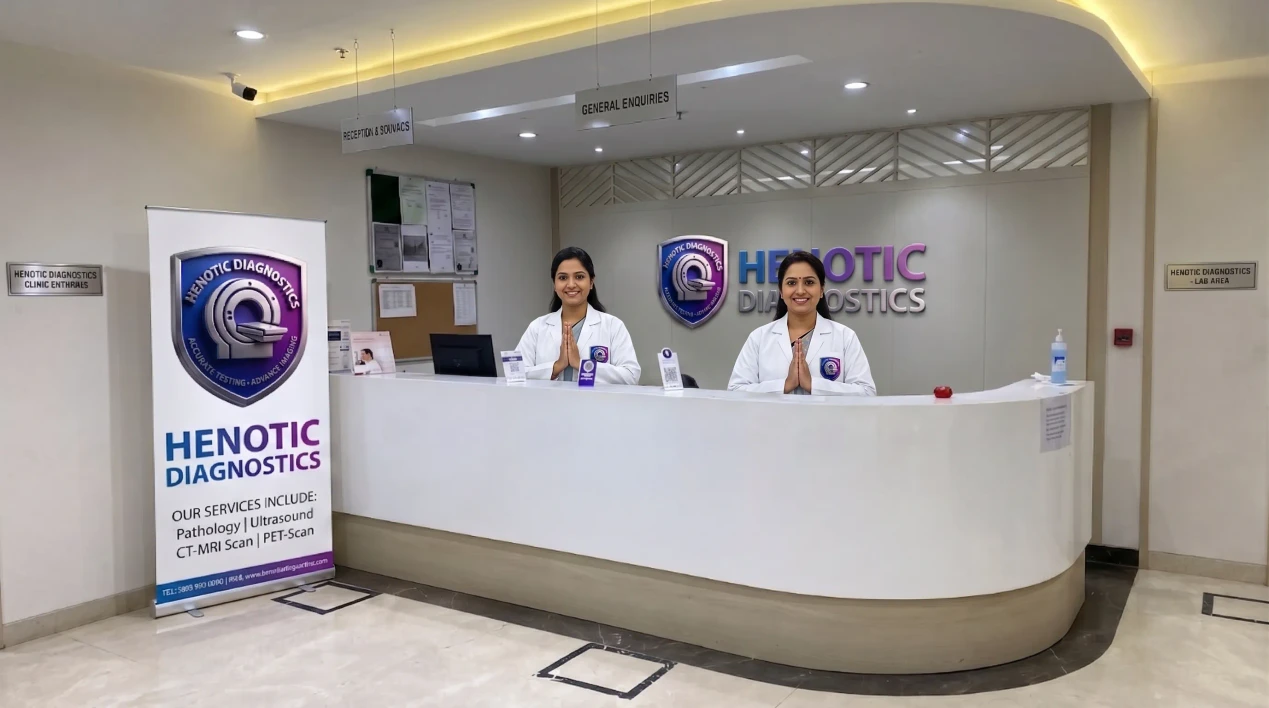 Furthermore, private 3T MRI scanning suite ensures patient comfort and high diagnostic accuracy.
What is an MRI Hip Scan?
In general, an MRI Hip scan is a non-invasive diagnostic procedure that captures multiplanar magnetic resonance cross-sections of both hip joints simultaneously. Essentially, radiofrequency pulses align hydrogen protons in bone marrow, articular cartilage, and surrounding ligaments, producing exceptionally detailed images of the femoral head vascularity without surgical exploration. Therefore, physicians observe whether hip pain originates from bone ischemia, labral fraying, or soft tissue bursitis. Additionally, this scan involves zero ionizing radiation.
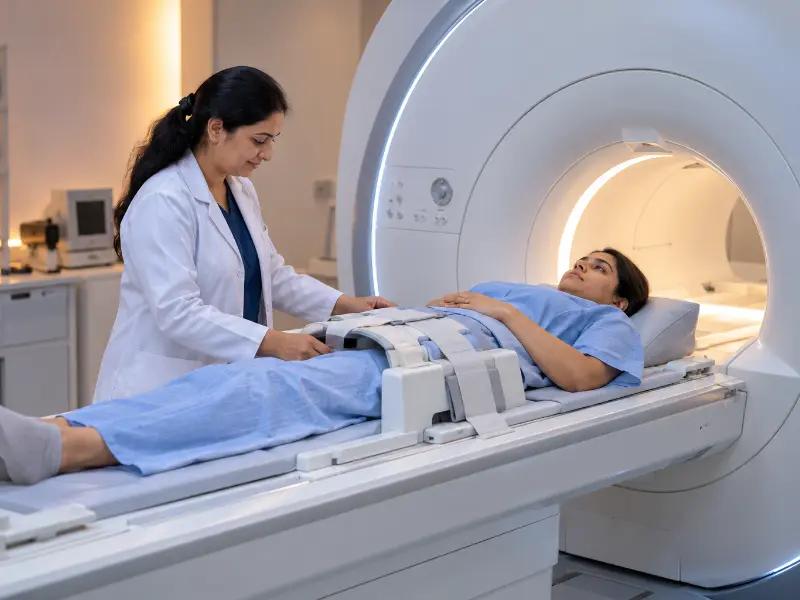 Additionally, wide-bore 3T MRI scanners deliver exceptional signal resolution and patient comfort.
Key Diagnostic Parameters & Findings in MRI Hip Scanning
Overall, radiologists analyze four key structural and vascular parameters on multiplanar 3T MRI Hip sequences:
MRI Hip Key Clinical Indicators Examined
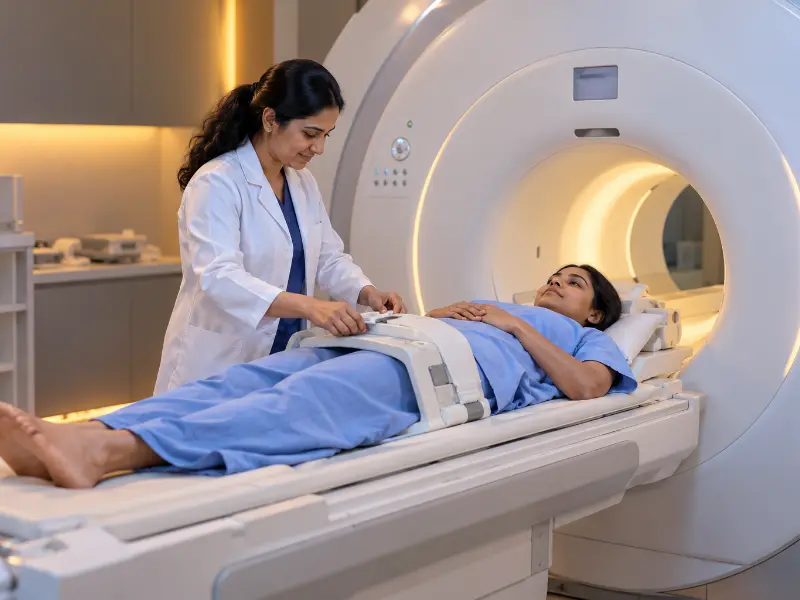 In addition, real-time multiplanar 3T MRI scans accurately map femoral head blood supply and labral structures.
When Is an MRI Hip Scan Recommended?
For example, orthopedic specialists order an MRI Hip scan when patients experience deep anterior groin pain, painful clicking during leg rotation, unexplained night hip pain, or difficulty weight-bearing after long-term steroid therapy or trauma. In particular, doctors request testing prior to joint preservation surgery or hip arthroscopy. Moreover, it is essential for staging femoral head Avascular Necrosis (AVN) in high-risk patients.
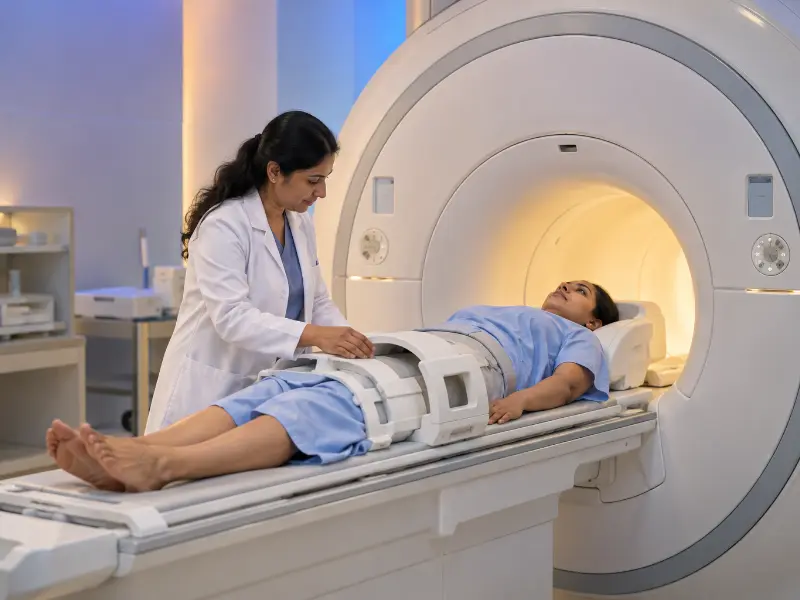 Moreover, high-resolution 3T MRI Hip scanning is recommended for early AVN detection and labral tear staging.
Step-by-Step Patient Preparation and Prerequisites
First of all, proper preparation ensures a smooth MRI Hip examination. Prior to entering the scanner room, patients complete a comprehensive safety screening checklist to identify any metallic implants, pacemakers, neurostimulators, or metallic foreign bodies.
Fasting and Contrast Injection Conditions
In general, routine non-contrast MRI Hip scans for AVN, stress fracture, or bursitis evaluation require no fasting whatsoever. However, if your doctor orders a Contrast-Enhanced MRI or Direct MR Arthrogram to evaluate subtle labral tears or soft tissue tumors, specific clinical conditions apply:
Contrast Gadolinium Safety Protocol:
- First, maintain 4 hours of strict fasting (water permitted) prior to contrast administration.
- Second, provide recent Serum Creatinine / eGFR lab results to confirm normal kidney clearance.
- In addition, a small IV cannula is placed safely into an arm vein for gadolinium contrast injection during scanning.
- Furthermore, contrast gadolinium sharply delineates synovial inflammation, tumor margins, and intra-articular labral detachment.
What to Expect During the Procedure
Overall, the MRI Hip scan is painless, comfortable, and zero-radiation. You will lie on your back on the padded scanner table, with a lightweight pelvic coil placed gently over your hip region. As the table moves into the wide-bore scanner, noise-reducing headphones are provided to buffer magnet tapping sounds. The scan takes 25 to 40 minutes, during which you remain still and breathe quietly. Additionally, an emergency squeezable bulb is in your hand at all times for instant technologist contact.
Advanced Medical Technology: Machines and Models
At Henotic Diagnostics, we utilize state-of-the-art 3 Tesla (3T) wide-bore MRI systems engineered by Siemens and GE Healthcare. Specifically, our machines feature high-density pelvic array coils and advanced pulse sequences (T1, T2, STIR, and PD Fat-Sat). Therefore, our scanners resolve sub-millimeter subchondral trabecular bone changes and detect early Stage I AVN that low-field scanners miss.
Post-Procedure Care & Aftercare Guidelines
Fortunately, recovery after a routine MRI Hip scan is immediate. Once the scan is complete, you may resume normal activities, return to work, and drive home without any downtime.
Diagnostic Reporting and Hardcopy Availability
In addition, our digital workflow delivers fast, high-precision reporting. Following your scan, complete DICOM image sets are uploaded to our PACS server. Chief Radiologist Dr. Pratibha Patil evaluates coronal, sagittal, and axial cross-sections, delivering detailed diagnostic reports within 2 to 4 hours. Furthermore, printed laser hardcopy films and digital USB/cloud report links are available at reception.
Second Opinion & Subspecialty Consultations
Besides routine reporting, early Avascular Necrosis (AVN) staging, complex labral tears, or pre-surgical joint preservation planning require expert subspecialty review. At Henotic Diagnostics, we provide dedicated second opinions and direct peer-to-peer case discussions with treating orthopedic surgeons:
Subspecialty Musculoskeletal Radiology Services:
- First, expert MSK radiologist second opinion reviews on external hip MRI films or DICOM data.
- Second, direct doctor-to-doctor consultations between our radiologist and your attending orthopedic surgeon.
- In addition, Ficat-Arlet staging of femoral head AVN prior to core decompression surgery.
- Furthermore, instant encrypted digital image sharing for emergency clinical reviews.
Why Choose Us for Your Care?
Choosing Henotic Diagnostics for your MRI Hip scan guarantees top-tier technology and compassionate patient care:
Transportation & Center Accessibility
Moreover, our diagnostic facility in Kharghar, Navi Mumbai, is designed for smooth accessibility:
Emergency Warning Symptoms for Hip Health
Ideally, you should seek urgent medical evaluation if you experience sudden inability to bear weight on the hip after a fall (suspected femoral neck fracture), sudden severe deep groin pain following high-dose steroid therapy (suspected acute AVN), or joint swelling accompanied by fever (suspected septic arthritis). In addition, immediate 3T MRI Hip scanning is vital to prevent femoral head collapse.
MRI Hip Test Cost Guide
| First, Diagnostic Hip Service | Second, Approximate Cost (₹) |
|---|---|
| First, Standard Non-Contrast Bilateral 3T MRI Hip Scan | First, standard MRI Hip scan cost is ₹6,500 – ₹6,500. |
| Second, Contrast-Enhanced 3T MRI Hip Scan (CE-MRI) | Second, Contrast MRI Hip costs ₹10,500 – ₹13,500. |
| In addition, Direct MR Arthrography Hip Scan (MR Arthrogram) | In addition, MR Arthrogram Hip costs ₹7,500 – ₹10,500. |
| Finally, Diagnostic MSK Radiology Consultation | Finally, expert radiologist consultation fee is ₹1,000. |
Comparison: Hip X-Ray vs. MRI Hip
On one hand, Hip X-ray excels at demonstrating advanced joint space narrowing and gross bony fractures. On the other hand, an MRI Hip scan provides 100% sensitivity for early Stage I Avascular Necrosis (AVN), acetabular labrum tears, bone marrow edema, and gluteal tendon tears before any bony collapse appears on X-rays.
| First, Feature | Second, Hip Pelvis X-Ray | Third, MRI Hip (3T MSK MRI) |
|---|---|---|
| First, Early AVN Stage I Sensitivity | First, X-ray appears completely normal in early AVN Stage I. | However, MRI detects early AVN marrow changes with >99% accuracy. |
| Second, Acetabular Labrum Tear Detection | Second, X-ray cannot visualize labral fibrocartilage at all. | In contrast, MRI clearly outlines labral tears & FAI impingement. |
| In addition, Soft Tissue & Tendon Detail | In addition, X-ray cannot see gluteus medius or trochanteric bursa. | Meanwhile, MRI visualizes tendon tears & bursal fluid cleanly. |
| Finally, Radiation Exposure | Finally, uses ionizing X-ray radiation. | Otherwise, gold standard using 100% zero radiation. |
Frequently Asked Questions
First, Is an MRI Hip scan painful? ▼
However, the scan is completely non-invasive and painless because it uses magnetic fields rather than invasive surgical procedures.
Second, Do I need fasting before an MRI Hip scan? ▼
Because non-contrast MSK MRI requires no fasting, you may eat normally. However, 4 hours fasting is required if gadolinium contrast is administered.
In addition, How long does the MRI Hip scan take? ▼
Generally, the complete scan takes 25 to 40 minutes depending on whether multi-planar sequences or contrast injections are required.
Furthermore, When will I receive my MRI Hip report? ▼
Fortunately, full DICOM digital scans and expert radiologist diagnostic reports are delivered within 2 to 4 hours.
Finally, What is the cost of an MRI Hip scan? ▼
Overall, a standard 3T MRI Hip scan ranges from ₹6,500 to ₹8,500 all-inclusive depending on contrast injection and arthrogram requirements.
Quick Appointment Booking
Schedule your MRI Hip scan with accredited radiodiagnostic experts.
First, Call: 088793 27184 Second, WhatsApp BookingQuick Test Summary Overview
Reporting Diagnostic Specialist

Dr. Pratibha Patil
First, Chief Consultant Radiologist & Diagnostic Specialist
Second, MBBS, MD (Radiodiagnosis) · 15+ Years Clinical Experience
Furthermore, your MRI Hip scans and multiplanar reconstructions are analyzed by senior musculoskeletal radiodiagnostic experts. Consequently, comprehensive reports provide orthopedic surgeons with precise anatomical data to evaluate early AVN, labral tears, and impingement.
Our Accreditations and Quality Standards
In addition, certified excellence ensures safety, hygiene compliance, and accurate diagnostic results.


What Our Patients Say
Furthermore, read real feedback from patients who completed MRI Hip scanning with us.
“First of all, Dr. Pratibha Patil’s team provided a clear 3T MRI Hip report showing early Stage I AVN in my femoral head. Early detection allowed my surgeon to save my native joint!”
– Vikram P.
First, Verified Patient Review“In addition, the wide-bore MRI machine was extremely comfortable. As a runner with an acetabular labrum tear, the scan was fast and completely painless.”
– Neha S.
Second, Verified Patient Review“Furthermore, prompt report delivery within 2 hours. High-resolution DICOM files and laser hardcopy films were provided right away. Excellent joint imaging center.”
– Rajesh M.
Finally, Verified Patient ReviewRelevant Diagnostic Radiology and Pelvic Services
Corporate Booking Office and Location
If you require a high precision MRI Hip scan for Avascular Necrosis (AVN), acetabular labrum tears, FAI impingement, or trochanteric bursitis, do not delay. In addition, call us today to schedule your appointment.
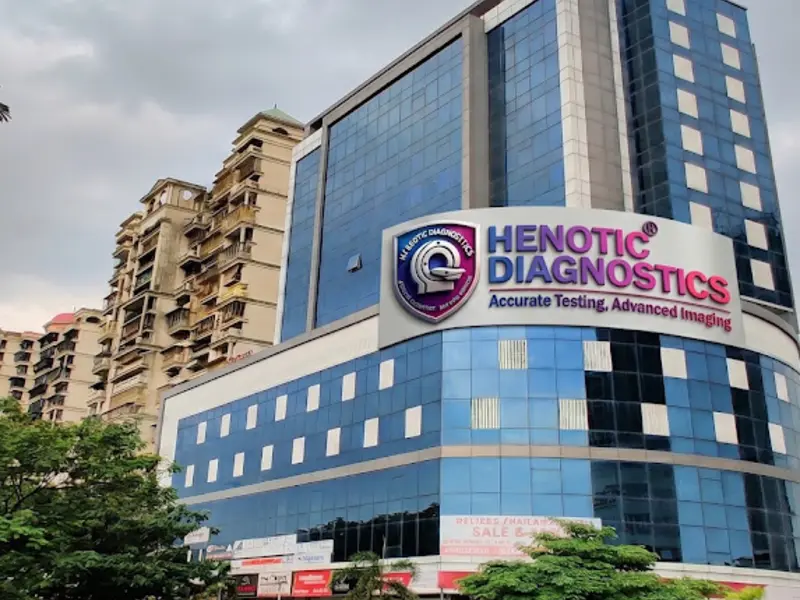
Henotic Diagnostics
First, Second floor, Millennium Empire, Business Park, Plot No 47, D Mart Rd, Sector 15, Kharghar, Navi Mumbai, Panvel, Maharashtra 410210
Phone: 088793 27184 | Hours: Open 24 Hours