

Holter Monitor Test — 24-Hour ECG & Continuous Heart Rhythm Monitoring
A Holter Monitor is a non-invasive ambulatory ECG test that continuously records the heart’s electrical activity over 24 hours or longer. As a result, it helps healthcare professionals identify intermittent heart rhythm problems that a short resting ECG may not capture. At Henotic Diagnostics, Holter monitoring is performed with proper patient guidance, precise electrode placement, continuous recording, and structured reporting.
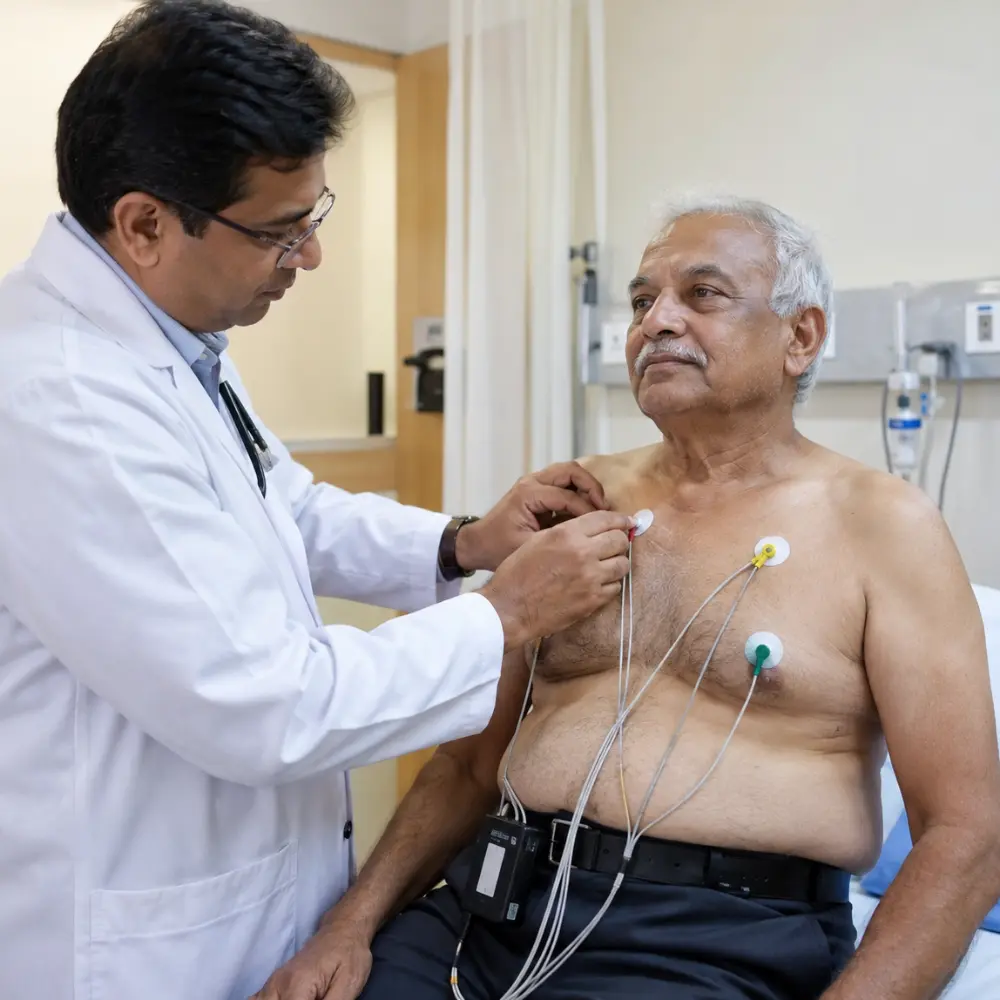
What Is a Holter Monitor?
A Holter Monitor is a portable ECG recording device used to continuously monitor heart rhythm during everyday activities. While a standard ECG provides only a brief snapshot of heart activity, a Holter Monitor records for a much longer period — typically 24 to 48 hours.
Consequently, healthcare professionals get far more data about heart rhythm patterns throughout the entire monitoring period. The monitor uses small ECG electrodes attached to the chest and a lightweight portable recording unit that stores the electrical signals from the heart.
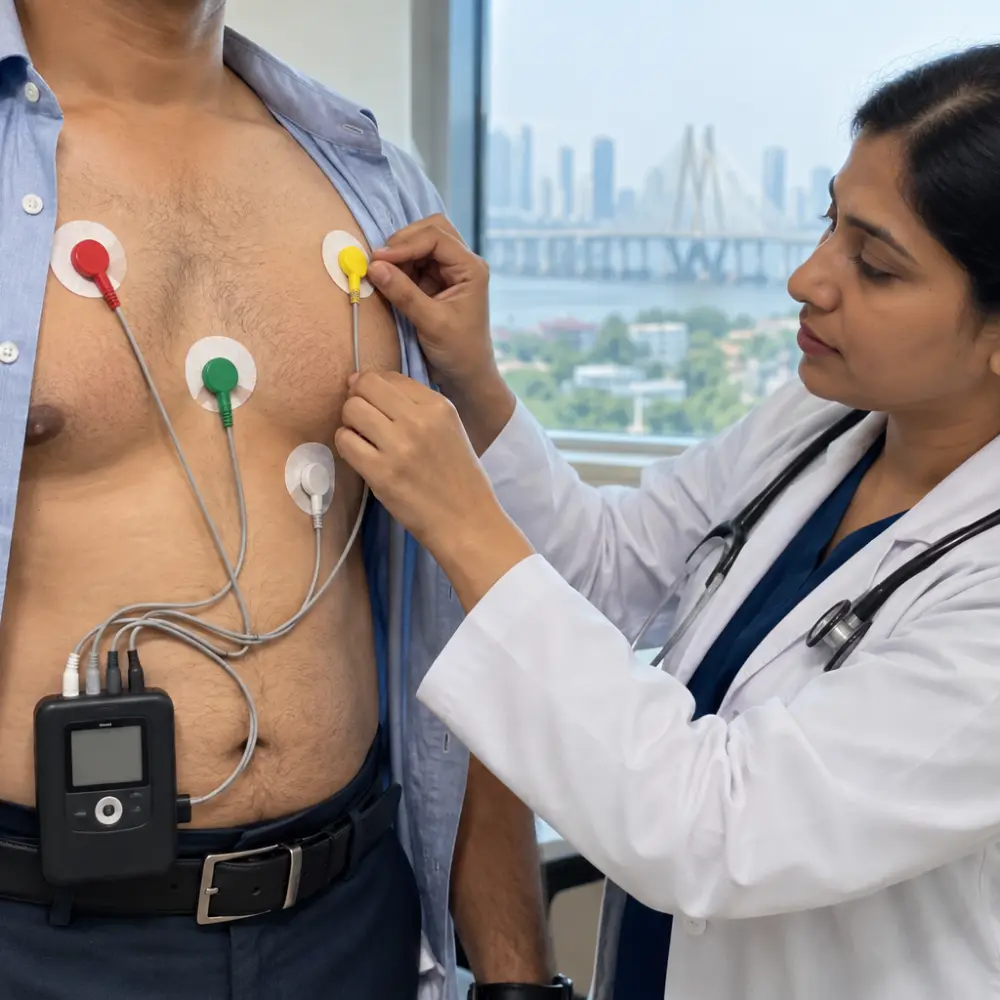
What Is Holter Monitoring Used For?
Holter monitoring is primarily used for extended evaluation of heart rhythm. In particular, a healthcare professional may recommend it when investigating:
Palpitations
Episodes of pounding, fluttering, or irregular heartbeat that come and go.
Suspected Arrhythmia
Rhythm problems that may occur only at certain times and aren’t caught on a quick ECG.
Fast or Slow Heart Rate
Episodes of unusually rapid or slow heart rate that need longer monitoring to detect.
Dizziness
When a heart rhythm cause is being considered for unexplained dizziness or fainting.
Sleep Rhythm Analysis
Recording heart rhythm during sleep, which a standard in-clinic ECG cannot capture.
Treatment Response
Evaluating how the heart rhythm responds to medication or other treatment when needed.
Holter Monitor vs Standard ECG
In contrast, a standard ECG offers only a brief snapshot. Below is a side-by-side comparison:
| Feature | Standard ECG | Holter Monitor |
|---|---|---|
| Recording duration | 10–30 seconds | 24–48 hours (or longer) |
| Monitoring type | Snapshot | Continuous |
| Device | Stationary (clinic-based) | Portable (worn on body) |
| Daily activity recording | Limited | Yes — during all activities |
| Sleep recording | Usually not captured | Yes — overnight recording |
| Intermittent issues | May be missed if absent during test | Extended window increases capture rate |
How Does Holter Monitoring Work?
The process is simple and non-invasive. First, the healthcare team prepares the patient — then the device does the rest:
Patient Assessment
The healthcare professional reviews the reason for monitoring and provides clear instructions on how to use the device.
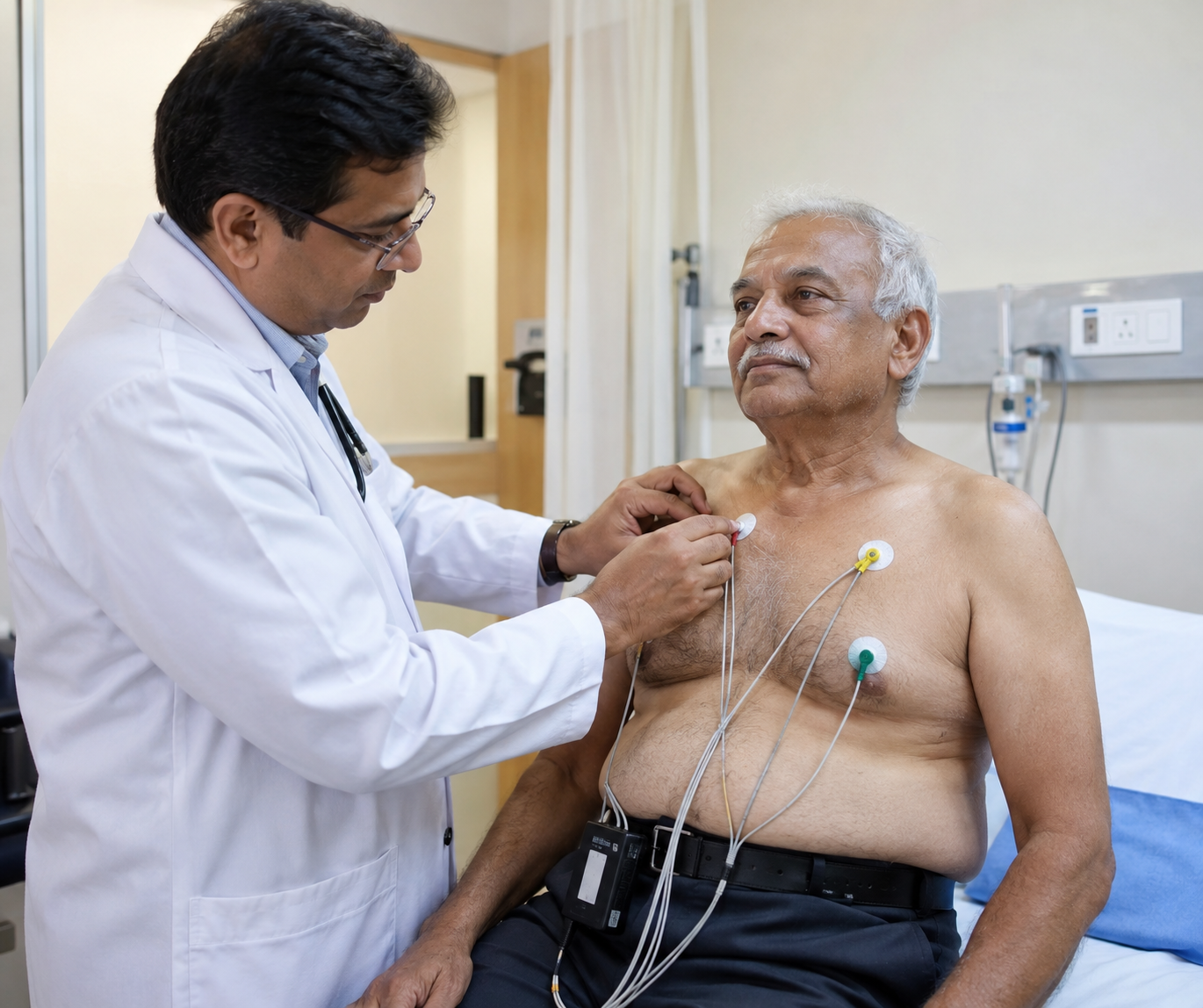
Electrode Placement
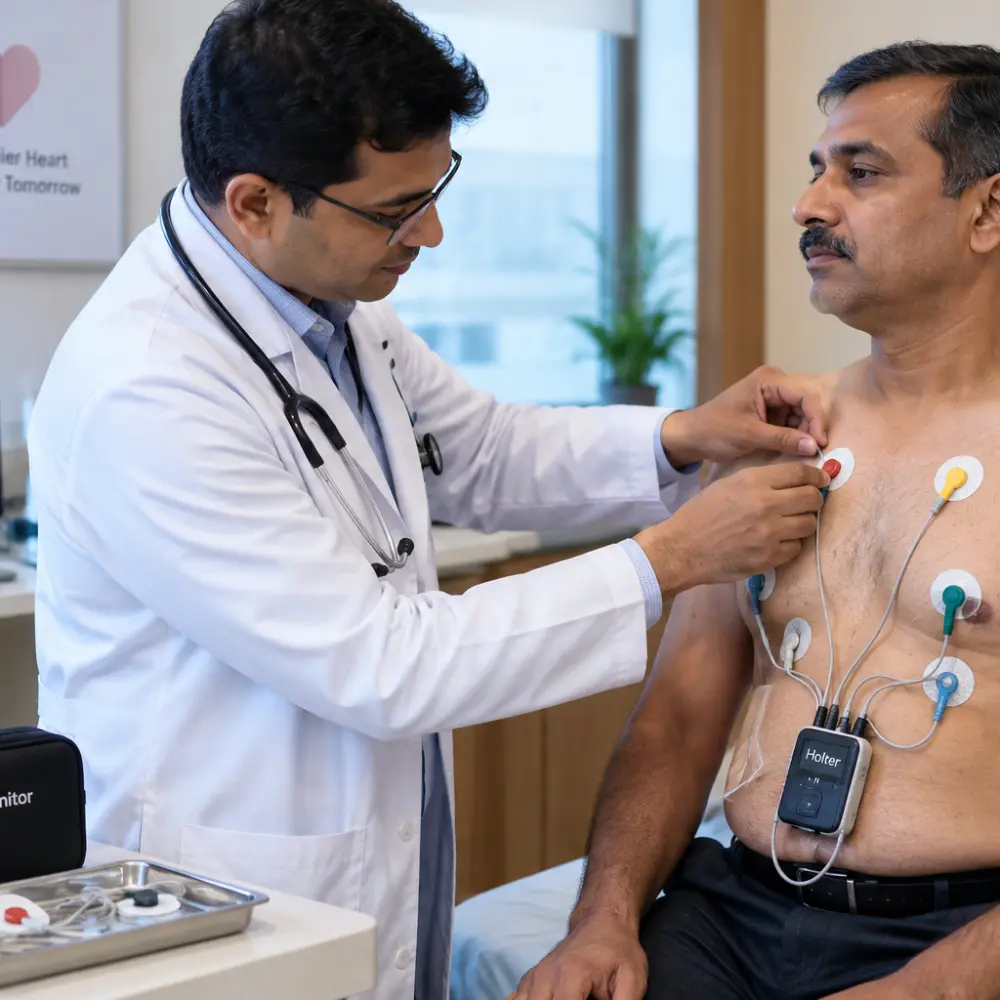
Next, small ECG electrodes are carefully placed on specific positions on the chest for accurate signal pickup.
Monitor Connection
After that, the electrodes are connected to a lightweight portable recording device that the patient wears.
Continuous Recording
The device then records the heart’s electrical activity non-stop throughout the prescribed monitoring period.
Daily Activities & Symptom Diary
Meanwhile, patients continue their normal routine. If instructed, they record the timing of any symptoms experienced.
Device Return
Once the monitoring period ends, the patient returns the device to the centre for data retrieval.
Data Analysis
Subsequently, the recorded ECG data is processed, analysed, and reviewed by a qualified cardiologist.
Structured Report
Finally, all relevant findings are documented in a comprehensive Holter monitoring report for clinical interpretation.
Holter Monitoring in Action
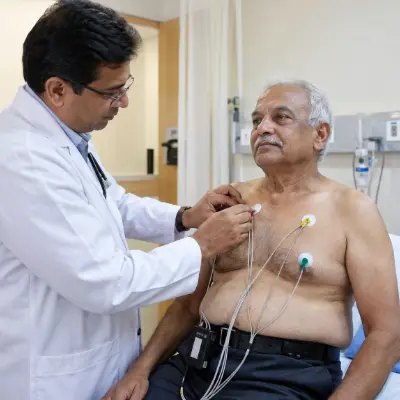
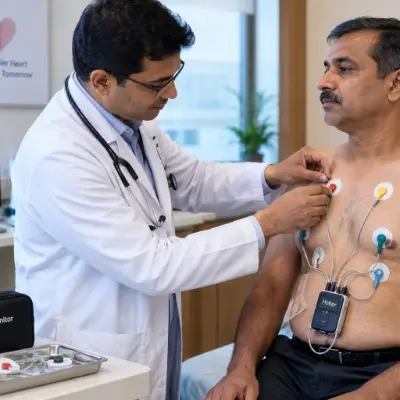
What Does a Holter Monitor Record?
The device continuously records electrical signals from the heart. Depending on the monitoring system, the analysis may include:
- Minimum, maximum, and average heart rate
- Heart rhythm patterns throughout the recording
- Premature beats and rhythm events
- Relevant ECG pattern changes
- Symptom-related events (when patient logs symptoms)
- Sleep-vs-awake rhythm differences
Therefore, the findings are interpreted alongside symptoms and clinical history by a qualified cardiologist.
How Long Does It Stay On?
The duration depends on the clinical requirement. Common periods include:
| Type | Duration |
|---|---|
| Standard Holter | 24 hours |
| Extended Holter | 48 hours |
| Ambulatory ECG | Up to 7 days (when indicated) |
Your healthcare professional will advise exactly how long the monitor should be worn based on your symptoms.
Holter Monitor Preparation
Before the Test
- Wear comfortable, loose-fitting clothing
- No fasting is typically required
- Inform the staff about all current medicines
- Continue prescribed medicines unless told otherwise
- Follow instructions about bathing and water exposure
- Keep the monitor and electrodes secure throughout
- Maintain a symptom diary if requested by the doctor
During the Test
- Sleep: Yes — the monitor records heart rhythm during sleep
- Work: Most patients can continue normal daily activities
- Exercise: Follow the specific instructions given for your device
- Avoid: Activities that could damage equipment, loosen electrodes, or expose the device to water
- Record symptoms: Log the time of any palpitations, dizziness, or chest discomfort
What Does a Holter Report Show?
After the recording period, the data is analysed and a structured report is prepared. Specifically, the report may include:
Heart Rate
Minimum, maximum, and average heart rate recorded during the entire monitoring period.
Heart Rhythm
Information about the overall rhythm recorded — whether regular, irregular, or showing specific patterns.
Rhythm Events
Any relevant rhythm problems or events identified during the automated and manual analysis.
Premature Beats
Details about premature cardiac beats, including their frequency and origin, when detected.
Symptom Correlation
Comparison between patient-recorded symptoms and ECG events at those exact times.
Clinical Summary
An overall summary for the referring doctor to interpret alongside the patient’s medical history.
Is Holter Monitoring Painful?
No. Holter monitoring is generally non-invasive and painless. The test simply involves placing ECG electrodes on the skin and connecting them to a portable recorder. However, some people may experience minor skin irritation from the adhesive electrodes — this is temporary.
Is Holter Monitoring Safe?
Yes. Because the device only records electrical activity from the heart — it does not deliver any electrical shock or radiation. As a result, it is considered a very safe diagnostic method for people of all ages. Always follow the specific instructions provided for your monitoring device.
Holter Monitoring — Pricing
24-Hour Holter Monitor Test
- 24-hour continuous ECG recording
- Professional electrode placement
- Portable monitoring device
- Cardiologist-reviewed report
- Report within 24–48 hours
Report Delivery: WhatsApp, Email, or Hardcopy at the centre.
Insurance: Cashless and reimbursement options may be available — please confirm at booking.
Reporting Cardiologist

Dr. Amulya Patil
MBBS, MD (General Medicine), DM (Cardiology)
- Specialisation
- Cardiology
- Experience
- 14 Years Overall | 11 Years Specialist
- MMC Reg. No
- 2010020293
Dr. Amulya Patil is a Senior Consultant Cardiologist at Henotic Diagnostics, providing specialised care for patients with heart and cardiovascular conditions. He works closely with diagnostic teams for cardiac investigations such as 2D Echo, TMT, ECG, and Holter Monitoring — helping patients make informed healthcare decisions.
Why Choose Henotic Diagnostics?
Holter ECG
Continuous heart rhythm recording
Patient Guidance
Clear instructions & preparation
Precise Placement
Proper ECG electrode positioning
Portable Monitor
Lightweight, wearable device
Cardiologist Report
Reviewed by DM Cardiology
24/7 Available
Round-the-clock booking
NABL Accredited
Quality-assured diagnostics
Fast Reporting
Report in 24–48 hours
Trusted by Patients & Doctors
Accreditations & Certifications


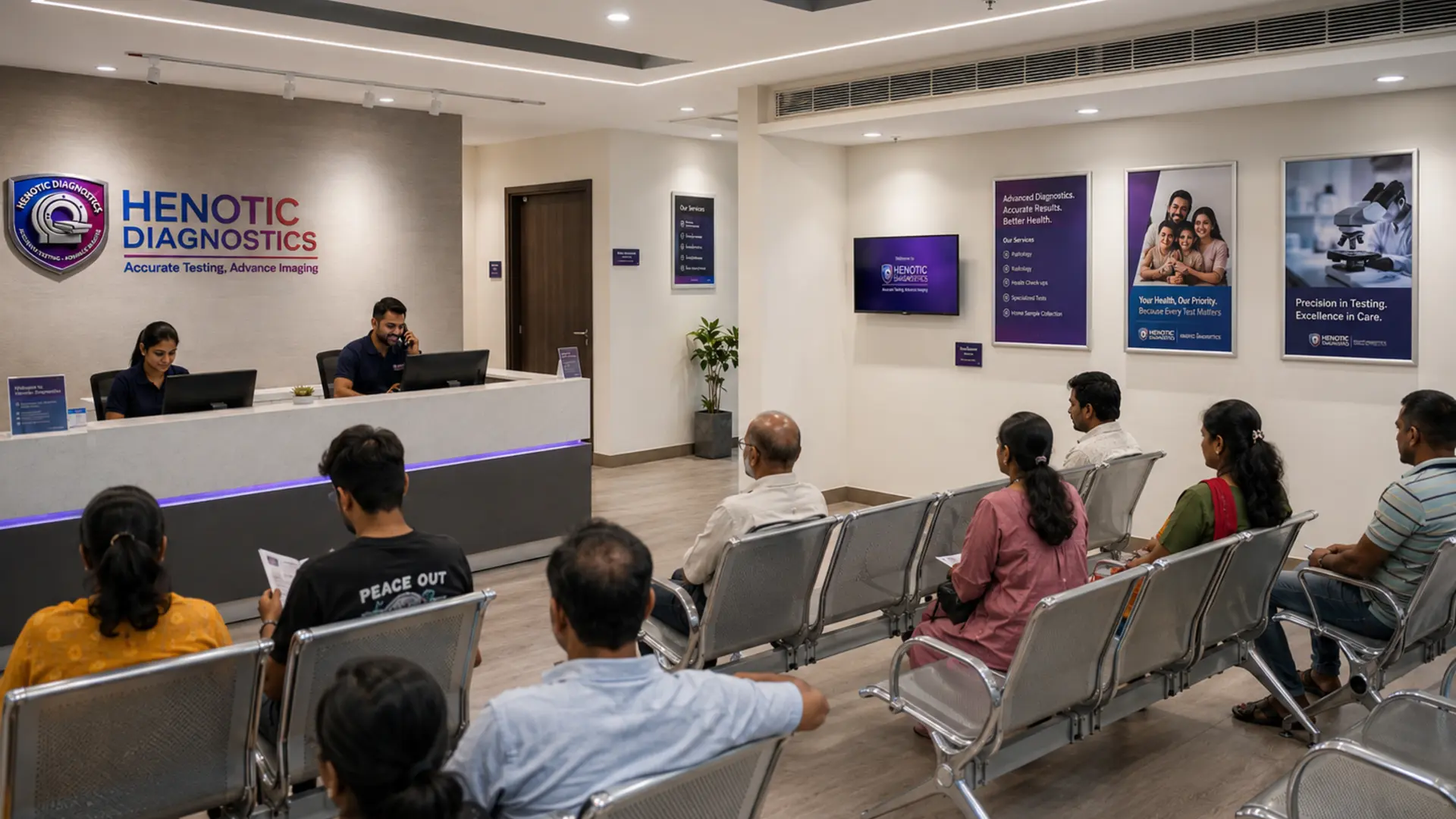
Our Facility

Frequently Asked Questions
What is a Holter Monitor?
Essentially, it is a portable device that continuously records the heart’s electrical activity over an extended period — typically 24 to 48 hours.
Can you do this test today?
Yes, in most cases. Because our centre is open 24/7, same-day Holter monitoring can usually be arranged. Call to confirm slot availability.
How much will it cost?
Pricing depends on the monitoring duration and clinical requirements. Call 088793 27184 for the current rate.
Where are you located?
We are located on the second floor, Millennium Empire, Business Park, Plot No 47, D Mart Rd, Sector 15, Kharghar, Panvel, Maharashtra 410210.
How do I book or call?
Simply call 088793 27184 — our booking line is open 24 hours. Alternatively, you can walk in to the centre.
Is fasting required for a Holter test?
Usually no. Fasting is generally not required for Holter monitoring. However, follow any specific instructions given by your doctor.
When will I receive my report?
Reports are typically ready within 24–48 hours after the device is returned. You can receive them via WhatsApp, email, or hardcopy at the centre.
Is a Holter Monitor the same as an ECG?
No. A standard ECG provides a short recording, whereas a Holter Monitor provides extended continuous ECG recording over 24 hours or longer.
Can I sleep while wearing a Holter Monitor?
Generally yes. In fact, the device is specifically designed to record heart rhythm during sleep when worn according to instructions.
Can I work while wearing a Holter Monitor?
Many patients can continue normal activities. Nevertheless, activities that could damage the device, loosen electrodes, or get it wet should be avoided.
Can a Holter Monitor detect irregular heartbeat?
Yes. Because the recording continues for hours, it can identify various heart rhythm patterns and problems that may be missed on a short ECG.
What if I don’t experience symptoms during the test?
The monitor still records heart rhythm throughout the entire period. Your doctor can then decide whether additional monitoring is needed if symptoms aren’t captured.
Contact Henotic Diagnostics

Henotic Diagnostics
📍 Address: Second floor, Millennium Empire, Business Park, Plot No 47, D Mart Rd, Sector 15, Kharghar, Panvel, Maharashtra 410210
🗺️ Google Maps:  Get Directions
📞 24/7 Helpline: 088793 27184
🕒 Hours: Open 24 hours, 365 days a year