Groin Ultrasound
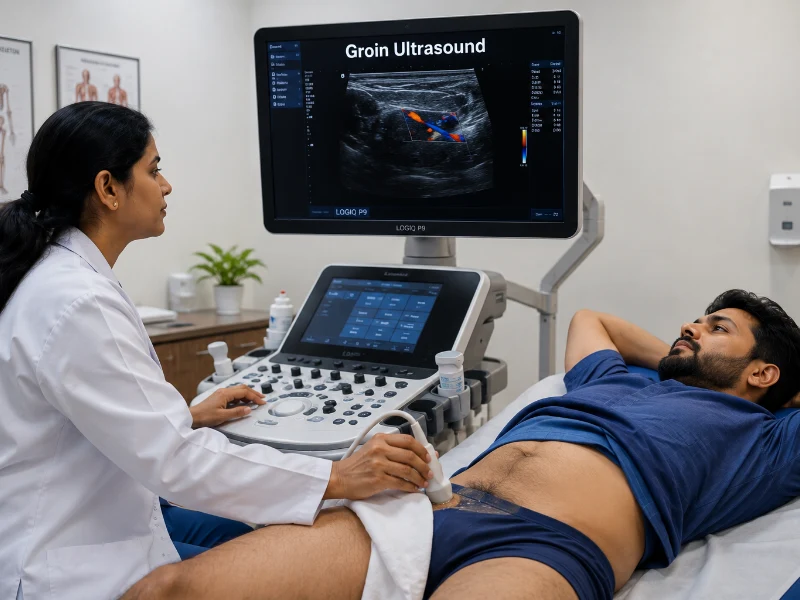
Safe & Accurate Ultrasound for Groin Pain, Swelling, and Hernia
A Groin Ultrasound is a safe, painless, and radiation-free imaging test that helps doctors examine the soft tissues, muscles, lymph nodes, blood vessels, and other structures in the groin area. At Henotic Diagnostics, Kharghar, our radiologists use high-frequency sound waves to create real-time images, helping diagnose the cause of groin pain, swelling, lumps, or suspected inguinal hernias. Consequently, this scan is highly effective for evaluating enlarged lymph nodes, infections, and other groin conditions. Furthermore, because the examination provides immediate imaging, it helps support early diagnosis and timely, evidence-based treatment planning. For more information on diagnostic safety, visit the American Institute of Ultrasound in Medicine.
What is a Groin Ultrasound?
A Groin Ultrasound is a diagnostic imaging test that examines the tissues and structures in the groin (inguinal) region. Essentially, unlike X-rays or CT scans, this examination uses sound waves instead of radiation. Therefore, it is considered a safe imaging option for adults, children, and expectant mothers when medically indicated. Additionally, the scan can assess both the left and right groin and may be performed on one side or both sides, depending on your specific symptoms, as noted by the RadiologyInfo musculoskeletal ultrasound guide.
Who Should Get a Groin Ultrasound?
Physicians commonly recommend this scan for patients presenting with groin-related concerns. For instance, it is vital for individuals suffering from unexplained groin pain, visible lumps, or localized swelling. Moreover, it is frequently ordered for athletes with sports injuries or patients requiring follow-up after groin surgery. Additionally, patients with suspected femoral hernias or enlarged lymph nodes are often referred for this diagnostic imaging to ensure timely clinical management.
Why Physicians Recommend Groin Ultrasound
Medical professionals prioritize this test because it allows for dynamic assessment, including maneuvers like coughing or straining, to reveal hernias that may not be visible at rest. Above all, it provides high-resolution data on muscle and soft tissue health. Supported by guidelines from the Radiological Society of North America, it is a preferred diagnostic tool for investigating groin masses.
Indications for Groin Ultrasound
Doctors advise this examination to investigate various clinical concerns. Specifically, these include groin pain, swelling, suspected inguinal or femoral hernias, and enlarged lymph nodes. Furthermore, it is used to evaluate sports-related muscle strains, fluid collections, and soft tissue masses.
When to Contact a Doctor Immediately
Ideally, you should seek urgent care if you experience sudden, severe groin pain, a lump that has become firm or irreducible, or fever associated with groin redness and swelling. Ultimately, early evaluation is essential to identify potential hernia complications, as discussed in professional resources from the National Institute of Arthritis and Musculoskeletal and Skin Diseases.
What the Groin Ultrasound Checks
The scan provides a comprehensive evaluation of the groin structures:
- Structures: Inguinal region, inguinal canal, and surrounding muscles/tendons.
- Lumps & Masses: Hernia sacs, lipomas, sebaceous cysts, and enlarged lymph nodes.
- Tissue Health: Blood vessels, fluid collections, abscesses, and post-surgical scar tissue.
Symptoms That May Need a Groin Ultrasound
Your doctor may recommend this scan if you experience: Groin pain or pressure, a visible lump, pain while walking or lifting, discomfort during exercise, or persistent tenderness. Proper investigation of these symptoms is detailed in our guide to Small Parts Ultrasound.
Types of Groin Ultrasound Studies
Depending on your clinical needs, our radiologists may perform:
- Groin Soft Tissue Ultrasound: A detailed assessment of muscles, fat, skin, and soft tissues.
- Hernia Ultrasound: A specialized scan incorporating dynamic maneuvers (coughing/straining) to confirm the presence and type of hernia.
- Groin Doppler Ultrasound: Evaluates blood flow within masses or vascular structures, aiding in the differentiation of soft tissue lesions.
Conditions Detectable via Groin Imaging
This diagnostic tool is highly effective at identifying various conditions:
- Hernias: Inguinal, femoral, recurrent, and small occult hernias.
- Lymph Node Disorders: Reactive, infected, or suspicious lymph node enlargement.
- Soft Tissue/Sports Injuries: Lipomas, abscesses, hematomas, muscle tears, and athletic pubalgia.
Benefits of the Groin Ultrasound Procedure
The procedure is safe, radiation-free, painless, and non-invasive. In addition, it offers high-resolution, real-time imaging that is affordable and requires no recovery time, making it suitable for all age groups.
Preparation and Procedure Steps
Generally, preparation is simple. Please wear loose, comfortable clothing to allow easy access to the groin area and bring all previous medical reports. Notably, most patients do not require fasting, but you should inform the radiologist about any prior surgeries.
Groin Ultrasound Cost Guide
| Diagnostic Service | Approximate Cost (₹) |
|---|---|
| Unilateral Groin Ultrasound | ₹1,500 – ₹2,500 |
| Bilateral Groin Ultrasound | ₹2,000 – ₹3,500 |
| Hernia Ultrasound Examination | ₹2,000 – ₹3,500 |
| Groin Ultrasound with Doppler | ₹2,500 – ₹4,500 |
Comparison: Ultrasound vs. CT Scan
Ultrasound uses sound waves, whereas CT scans utilize X-rays. Consequently, ultrasound is preferred for its dynamic assessment capabilities during straining, while CT imaging is typically reserved for complex abdominal evaluations, as highlighted by the National Center for Biotechnology Information.
Frequently Asked Questions
Is the procedure painful?
No, the scan is painless, though you may feel slight pressure during the probe movement or straining maneuvers.
Can it detect a hernia?
Yes, it is highly effective for identifying inguinal and femoral hernias, especially when dynamic movements are performed.
Do I need to fast?
No, most groin ultrasound examinations do not require fasting.
How long does it take?
Most examinations take between 15 and 30 minutes.
Visit Henotic Diagnostics, Kharghar
Our imaging facility in Kharghar is fully equipped with advanced ultrasound technology. We ensure professional protocols, patient comfort, and rapid report turnaround.
Address: Second floor, Millennium Empire, Business Park, Plot No 47, D Mart Rd, Sector 15, Kharghar, Navi Mumbai, Panvel, Maharashtra 410210.
Phone: 088793 27184
What Our Patients Say
⭐⭐⭐⭐⭐
“Professional and thorough service. The radiologist clearly explained the findings, which gave me great peace of mind.”
⭐⭐⭐⭐⭐
“Very fast service and clean facility. Reports were sent digitally to my phone immediately.”
Why Choose Henotic Diagnostics?
Henotic Diagnostics provides high-quality groin ultrasound imaging with expert radiologists in Kharghar. Above all, we focus on clinical accuracy, patient privacy, and fast, digital report delivery.
Relevant Diagnostic Services
Book Your Appointment in Kharghar
If you have concerns about groin pain or swelling, do not delay. Call 088793 27184 to book your slot. Alternatively, you may explore our full range of diagnostic services online.